
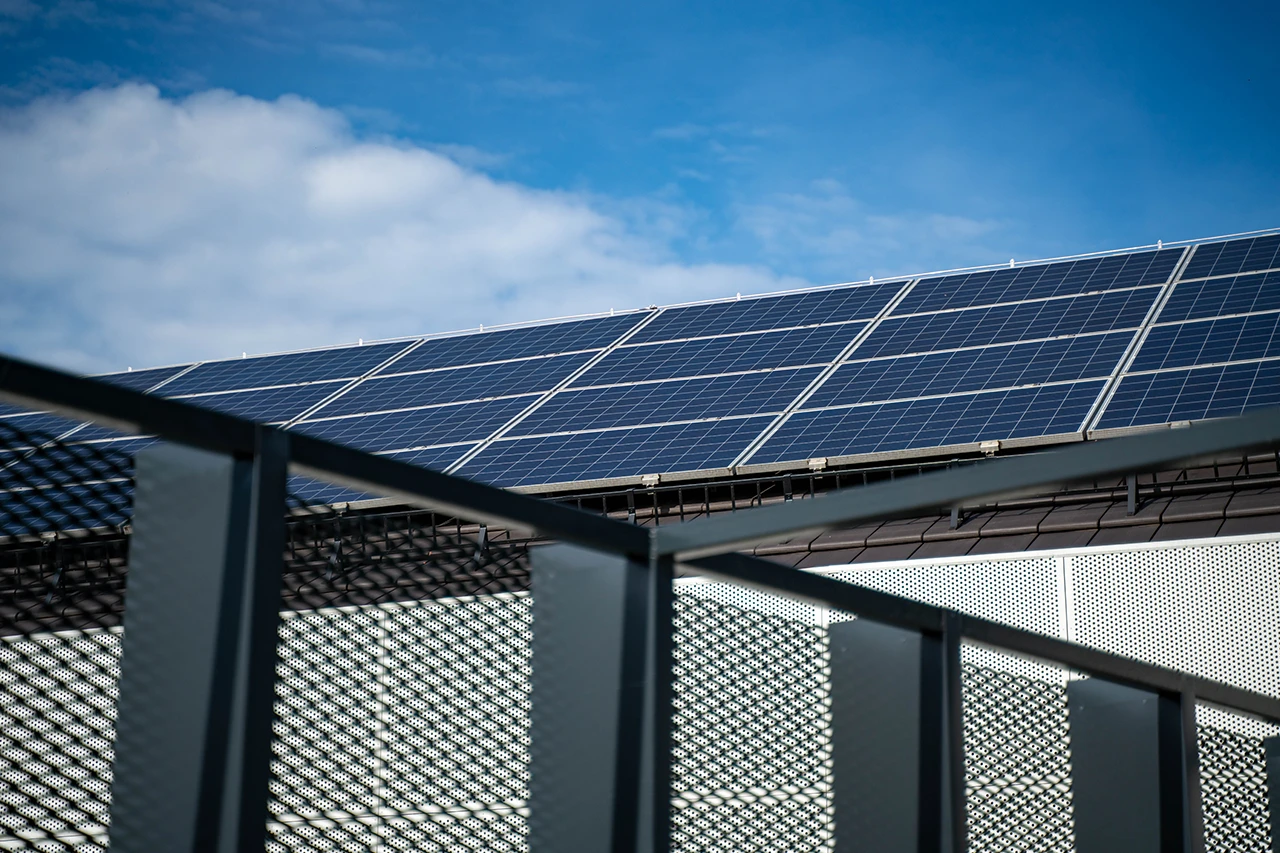
Santa Rosa homeowners pay an average of $308 per month on electricity — roughly 64% above the national average. Over 25 years, that adds up to more than $92,400 in utility bills at current rates. Solar panels in Santa Rosa, CA, represent the clearest path to escaping that compounding cost. But the solar landscape changed significantly in 2025 and 2026, and the decisions that made sense three years ago look different today.
This guide covers everything you need to know before installing solar panels in Santa Rosa, CA. We address NEM 3.0 changes, why battery storage is now essential, how WUI codes affect Santa Rosa properties, and what incentives still apply in 2026. We also explain how to find a solar installation company in Santa Rosa that will still support your system years after installation.
Why Solar Panels in Santa Rosa, CA, Still Make Strong Financial Sense
PG&E Rates and the Cost of Waiting
PG&E’s time-of-use rates range from 28 to 52 cents per kilowatt-hour depending on the hour. That range makes Santa Rosa one of the most expensive utility markets in California. Rates have increased at roughly 5 to 8% annually for the past decade, with no structural mechanism driving them downward.
Every year without solar panels is another year of compounding cost. A homeowner paying $308 per month for electricity today will see those costs rise substantially over time as utility rates increase. Solar reduces the amount of electricity you need to purchase from PG&E, helping lower your monthly energy costs and providing meaningful savings over the life of the system. You’ll pay a fraction of what grid electricity would cost over the same period.
What Has Changed With NEM 3.0
Under California’s NEM 3.0 Solar Billing Plan, daytime solar export credits dropped by roughly 75%. A solar-only system typically has a payback period of 5 to 6 years. Adding a solar battery in Santa Rosa can drop that to 3 to 4 years. Battery storage lets you capture midday solar energy and discharge it during PG&E’s costly evening peak hours from 4 to 9 PM. That is when the rate difference is most significant.
This shift means the design of your solar system matters far more than it did under the old net metering rules. A well-designed system with the right panel count, inverter type, and storage capacity outperforms an oversized system without storage. This is one of the most important things to understand before you invest in solar panels.
What NEM 3.0 Means for Santa Rosa Solar Buyers Specifically
Santa Rosa is in PG&E territory, where new solar customers are generally enrolled in the Solar Billing Plan, commonly known as NEM 3.0. Unlike older solar programs that settled most electricity costs at an annual true-up, NEM 3.0 customers are billed monthly for electricity they draw from the grid, while receiving credits for excess solar energy sent back to PG&E. The value of those export credits varies by time of day and season, with some of the highest values occurring during peak evening periods.
A battery paired with your panels stores excess midday production and discharges it from 4 to 9 PM. That directly replaces the most expensive grid electricity you would otherwise buy. Homeowners who install solar panels in Santa Rosa, CA, with battery storage consistently see monthly bill reductions of 60 to 90%, depending on system size.
Without batteries, excess daytime solar exports at very low rates. You buy it back in the evening at peak rates. A solar battery in Santa Rosa eliminates that expensive exchange entirely.
How WUI Codes Affect Solar Panels in Santa Rosa, CA
Santa Rosa is one of the few California cities where Wildfire Urban Interface (WUI) codes actively shape solar installation requirements. After the 2017 Tubbs Fire and the 2019 Kincade Fire, Santa Rosa updated its building codes. The changes reflect fire risk in neighborhoods at the wildland-urban edge.
What WUI Requirements Mean for Your Installation
WUI codes in Santa Rosa affect panel placement, mounting hardware, and sometimes structural reinforcement requirements. Properties in Fountaingrove, Rincon Valley, and the hillside neighborhoods above Annadel State Park are among those most directly subject to these requirements. A local installer that lacks specific WUI experience may underprice your project initially, then surprise you with cost changes during permitting.
We have installed solar panels in Santa Rosa, CA, across WUI-designated neighborhoods since before the Tubbs Fire changed the landscape. We know which neighborhoods trigger additional WUI review, what the City requires, and how to design systems that pass inspection without unnecessary cost.
Explore our Santa Rosa energy solutions page to see how we approach local installation requirements.
The Panel Upgrade Question
Many older Santa Rosa homes have 100-amp or outdated electrical panels. This is especially common in Montgomery Village, the Junior College area, and Railroad Square. A panel upgrade may be needed if the existing equipment is unsafe. This can add $3,000 to $5,500 to the project.
A trustworthy solar installation company in Santa Rosa will identify this issue during the site assessment. It should appear in your itemized quote — not arrive as a surprise after you sign.
Neighborhood-by-Neighborhood Solar Considerations in Santa Rosa
Santa Rosa is not one uniform solar market. Each major neighborhood has specific conditions that affect system design, production estimates, and installation complexity.
Coffey Park and Larkfield
The Coffey Park and Larkfield neighborhoods were largely rebuilt after the 2017 Tubbs Fire. These rebuilt homes typically have modern 200-amp electrical panels and newer roof structures — ideal conditions for solar installation in Santa Rosa, CA. Many Coffey Park homeowners now add solar panels as part of a broader home energy plan. Battery storage and a standby generator are common additions.
Fountaingrove
Fountaingrove properties face two distinct challenges: hillside rooflines that create complex shading conditions, and WUI codes that apply to nearly every installation in the area. Solar installation in Fountaingrove requires detailed shading analysis and WUI-compliant mounting systems. The good news is that Fountaingrove’s elevation provides exceptional sun exposure once shading is properly mapped.
Bennett Valley and Rincon Valley
These neighborhoods often sit at the edge of Santa Rosa‘s coastal marine layer influence. Properties here benefit from careful south- and west-facing panel placement to maximize production during the afternoon burn-off hours. Solar panels in Bennett Valley and Rincon Valley also sit within or near WUI zones, making local permitting knowledge essential.
Railroad Square and Downtown Santa Rosa
Older Victorian and craftsman homes near Railroad Square and Downtown Santa Rosa often have complex rooflines, limited roof planes, and older electrical infrastructure. Solar installation in these neighborhoods typically involves more detailed structural assessment. Enphase microinverters are often the preferred choice here because they optimize each panel independently on complex, multi-directional rooflines.
What Incentives Are Available for Solar Panels in Santa Rosa, CA, in 2026
What Remains After the Federal ITC Expired
The federal residential solar and battery tax credit expired December 31, 2025. Many homeowners are understandably confused about what this means for their investment. The honest answer is that meaningful support still exists; it has simply shifted to California-based programs.
California’s property tax exclusion for solar and battery systems applies through December 31, 2026. Your assessed value does not increase when you install solar panels in Santa Rosa, CA — for properties where real estate values are already high, this saves hundreds of dollars per year in avoided property tax.
California’s Self-Generation Incentive Program (SGIP) may still provide rebates through equity and resiliency pathways for Santa Rosa homeowners in Tier 2 and Tier 3 High Fire-Threat Districts. Vital Energy verifies your eligibility and applies on your behalf at no charge.
The Prepaid PPA Route
Prepaid Power Purchase Agreements remain fully available in 2026. They can reduce the cost of your solar battery in Santa Rosa or full solar system by approximately 30%. A third-party owner claims the commercial investment tax credit and passes the equivalent discount to you at point of sale. No personal tax liability is required. Our team explains every available financing pathway during your consultation.
How to Choose the Right Solar Installer in Santa Rosa
Not all Santa Rosa solar installers are equally equipped for 2026’s more complex solar decisions. Before you commit to any installer, ask these four questions:
- Do they install in-house? Some solar installations in Santa Rosa, CA, are subcontracted to third-party crews. Ask directly whether the team installing your system is employed by the company.
- Do they have WUI experience? Many neighborhoods require WUI-compliant installations. Ask the installer to cite specific WUI projects in your area.
- Do they design solar-plus-storage systems? Under NEM 3.0, a solar-only recommendation is a red flag. A strong Santa Rosa solar company should present battery options as standard practice. See our installer guide for what to expect.
- Do they offer long-term maintenance? Solar panels in Santa Rosa, CA, are a 25-year investment. Your installer should offer monitoring, cleaning, inspection, and warranty support long after installation day.
Vital Energy Solutions is a locally owned, family-oriented company recognized as Best of the Bay for Solar Companies. We have served Sonoma County homeowners since 1971. Every service we complete is managed entirely in-house — from site assessment through permits, installation, and long-term maintenance. No subcontractors. No surprises.
Areas We Serve Across Santa Rosa and Sonoma County
We install solar panels in Santa Rosa, CA, and throughout the surrounding Sonoma County communities. Our local service area includes:
- Coffey Park and Larkfield rebuild neighborhoods
- Fountaingrove and hillside estates above Santa Rosa
- Bennett Valley and Rincon Valley
- Railroad Square and Downtown Santa Rosa
- Montgomery Village and the Junior College area
- Mark West Springs and Wikiup
- Northwest Santa Rosa and Bellevue Ranch
- Oakmont and the Spring Lake corridor
- Annadel and Trione State Park adjacent neighborhoods
- North Santa Rosa rural parcels off Highway 101
We also serve Kenwood, Glen Ellen, Sebastopol, Napa, Novato, San Rafael, and communities across Sonoma, Marin, and Napa Counties.
Ready to Install Solar Panels in Santa Rosa, CA? Start Here.
Solar panels are the most reliable path to lower energy bills, wildfire-season resilience, and long-term energy independence. PG&E rates keep rising. Fire season returns every year. The property tax exclusion expires December 31, 2026.
Many homeowners in Coffey Park and along the Fountaingrove ridge have already installed solar panels. They are paying a fraction of what their neighbors pay for electricity. Those throughout Rincon Valley are similarly protected.
Vital Energy Solutions has served Sonoma County since 1971. We are recognized as Best of the Bay for Solar Companies. Every project is managed entirely in-house: design, WUI permitting, installation, battery storage, and long-term maintenance.
Call us today at (707) 800-3884 or request your solar consultation online. We will assess your home, design the right system, and handle every step — from WUI permit to power-on.
Pro tip: Before you invest, read our complete guide on what a solar installation company in Santa Rosa should offer in 2026. It covers site assessment, storage planning, backup power, and the key questions to ask before signing.
Frequently Asked Questions: Solar Panels in Santa Rosa, CA
1. Do WUI codes affect all Santa Rosa solar installations?
Not all Santa Rosa properties fall under WUI requirements. However, a significant portion of Fountaingrove, Rincon Valley, and the hillside areas above Annadel do. A local installer will confirm your property's WUI status during the free site assessment and plan your installation accordingly. Vital Energy has completed projects across every major WUI zone in the city.
2. Is battery storage required with solar panels in Santa Rosa, CA?
It is not legally required, but it is financially essential under NEM 3.0. Without a solar battery in Santa Rosa, your excess daytime solar exports to the grid at very low rates. You buy that energy back in the evening at peak rates. Adding a battery closes that gap and reduces your payback period from 5 to 6 years to 3 to 4 years.
3. How long does solar installation take from start to finish?
From site assessment to Permission to Operate, the typical timeline is 6 to 10 weeks. This includes system design, City of Santa Rosa building permit approval, physical installation of one to two days, and PG&E interconnection review. We manage every step and attend every inspection on your behalf.
4. How much do solar panels cost in 2026?
An average 9 kW system in Santa Rosa typically runs $19,000 to $26,000 before incentives. WUI code requirements, panel upgrade needs — which may be necessary if your existing panel is unsafe — and battery additions affect the final figure. Prepaid PPA structures can reduce the effective cost by approximately 30%. Vital Energy provides transparent, itemized quotes with $0 down financing for qualified homeowners.
5. How much can I save with solar panels?
PG&E's TOU rates range from 28 to 52 cents per kWh. A well-sized solar system with battery storage reduces your monthly PG&E bill by 60 to 90%, depending on system size. Solar panels in Santa Rosa, CA, paired with battery storage, pay back in 3 to 4 years. Over 25 years, homeowners consistently see six-figure lifetime savings compared to continued grid reliance.
6. What incentives are still available for solar panels in Santa Rosa, CA, in 2026?
The federal residential ITC expired December 31, 2025. However, California's property tax exclusion applies through December 31, 2026 — meaning your assessed value does not increase when you install solar panels in Santa Rosa, CA. SGIP equity and resiliency rebates may apply for homeowners in High Fire-Threat Districts. Prepaid PPA structures also effectively deliver a 30% discount.